
September 28, 2026
・
17
mins read

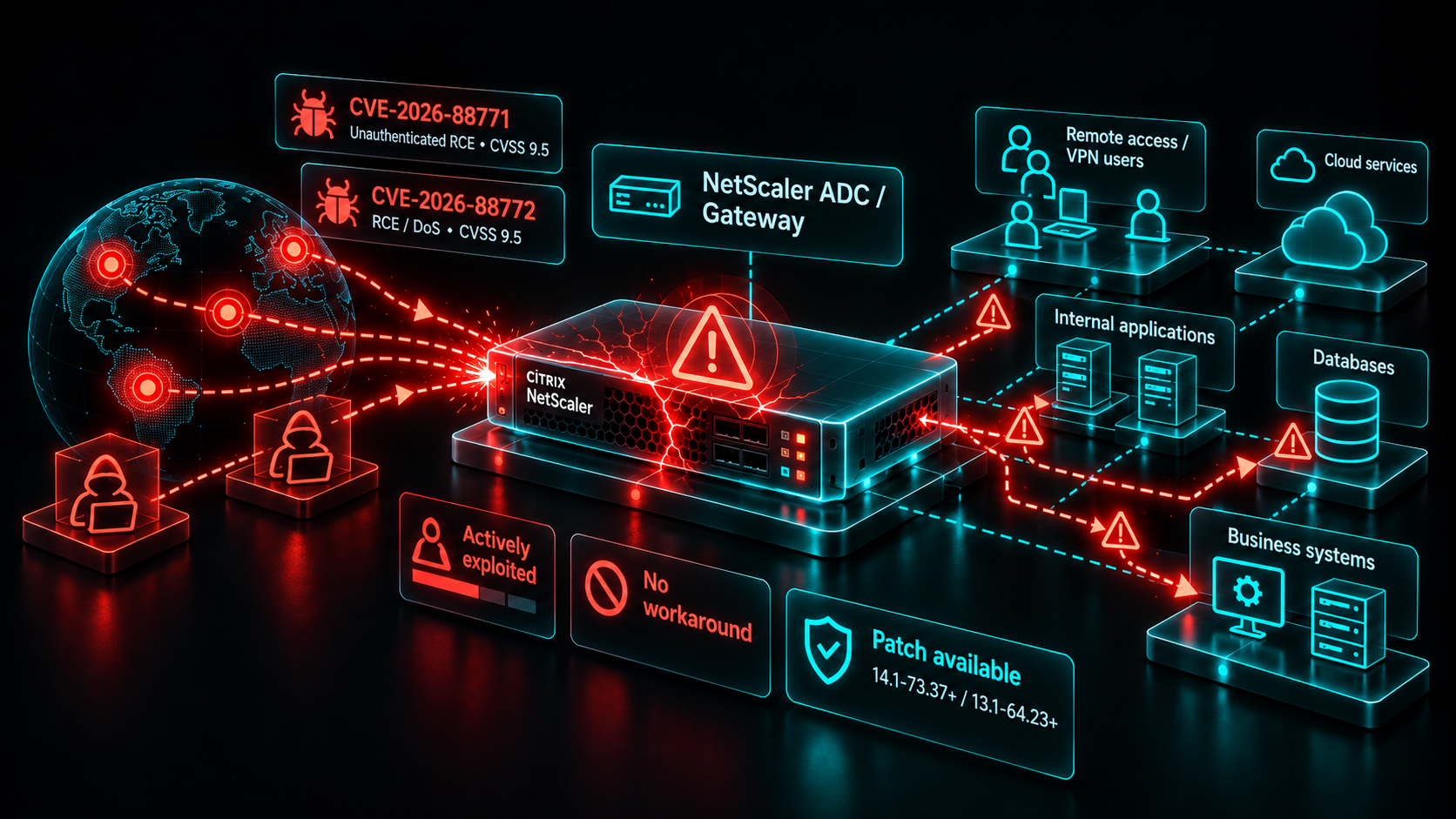
Two vulnerabilities, CVE-2026-88771 and CVE-2026-88772, have been identified in Citrix NetScaler ADC and NetScaler Gateway, widely used appliances for remote access and application delivery. Both have been given a CVSS base score of 9.5 and allow an unauthenticated attacker with network access to remotely execute code on the appliance. Citrix and CISA have confirmed both are being actively exploited in the wild. Fixed versions are available and no workarounds exist.
On 26 September 2026, security firm watchTowr publicly warned that unpatched vulnerabilities in Citrix NetScaler were being exploited. On 27 September 2026, Citrix published security bulletin CTX697096 with fixes, and CISA added both vulnerabilities to its Known Exploited Vulnerabilities (KEV) catalogue.
NetScaler ADC and NetScaler Gateway sit at the edge of an organisation's network. They are commonly used to give staff remote access (VPN, virtual desktops) and to load-balance and protect internet-facing applications. Because of this position, NetScaler appliances have been a frequent target for attackers in recent years.
Depending on how an organisation uses NetScaler, successful exploitation could, for example, allow an attacker to:
These are examples only. The actual impact will depend on each organisation's configuration and environment.
This threat could affect any organisation that uses Citrix NetScaler ADC or NetScaler Gateway (including FIPS and NDcPP builds) on a version earlier than the fixed releases listed above. This includes appliances managed or hosted on an organisation's behalf by a third party.
NetScaler is widely used for remote access and virtual desktop delivery, so exposure is likely to be common across sectors such as financial services, professional services, healthcare and the public sector. Organisations that have already patched may still be affected if their appliances were compromised before the fix was applied.
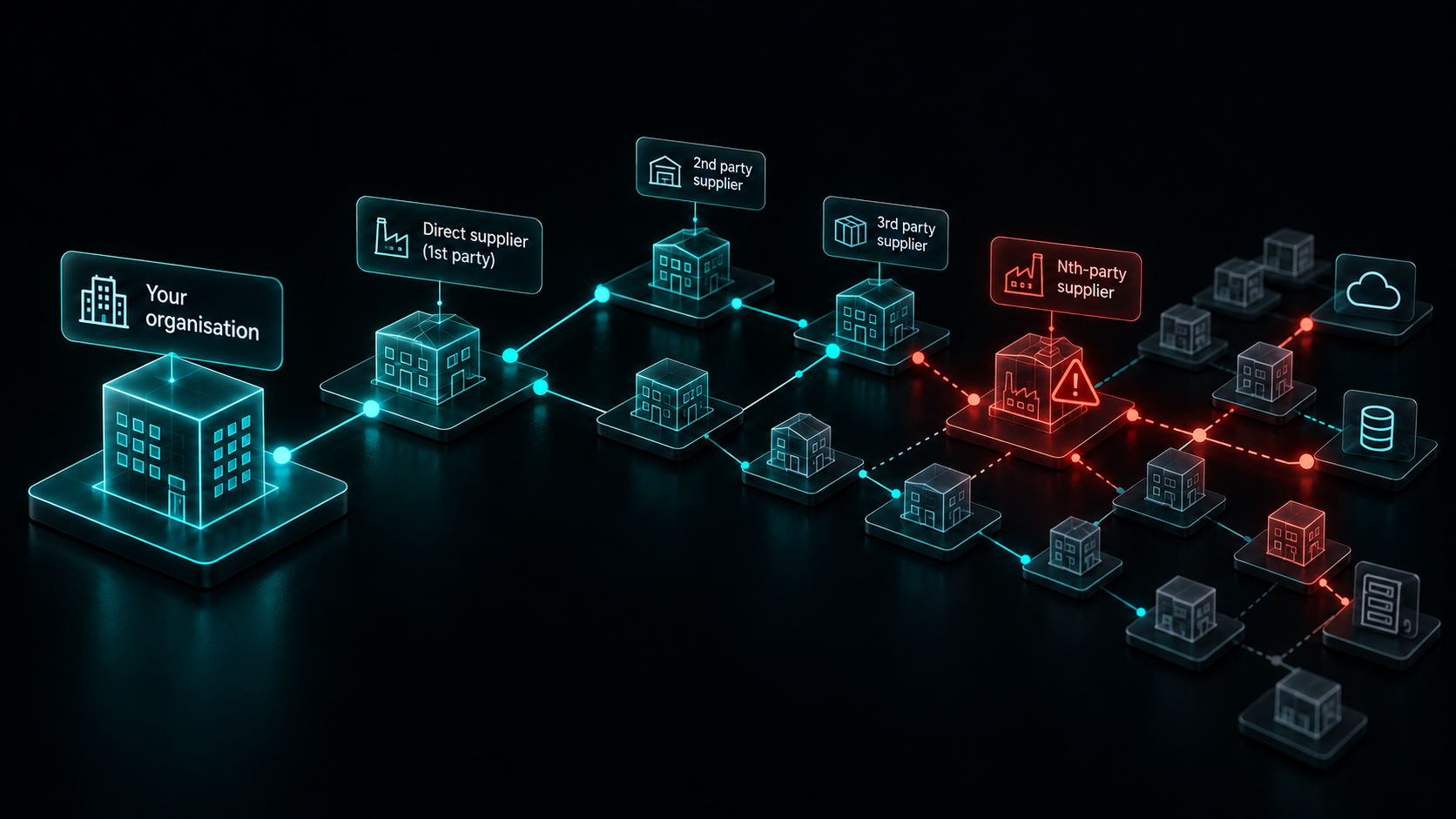
It is important to understand the extent to which your supply chain is affected by this threat because NetScaler is often the front door to a supplier's network. A compromised appliance can give an attacker access to the systems where your data is processed, or to the remote access paths your suppliers use to reach your environment.
We have published this threat on Risk Ledger because it meets our triage criteria: it is actively exploited, affects a widely used technology in its default configuration, and suppliers can give a clear answer on their exposure, patching and investigation. Because exploitation began before a fix was available, patching alone does not confirm that a supplier was not compromised, so we have also asked suppliers whether they have investigated for signs of compromise and rotated exposed credentials.
There are a few immediate actions you can take to help protect yourself from this threat:
This is an evolving situation. You can keep up to date with the latest information on this threat by reading:
To understand how your supply chain is affected by the Citrix NetScaler zero-days, create your free account on Risk Ledger. You can find out more about how the Emerging Threats feature on Risk Ledger works here.

Monthly research, case studies and practical guides you won't find anywhere else.
Join thousands of security managers turning their TPRM programmes into success stories.



.svg)