
September 22, 2026
・
9
mins read
.png)
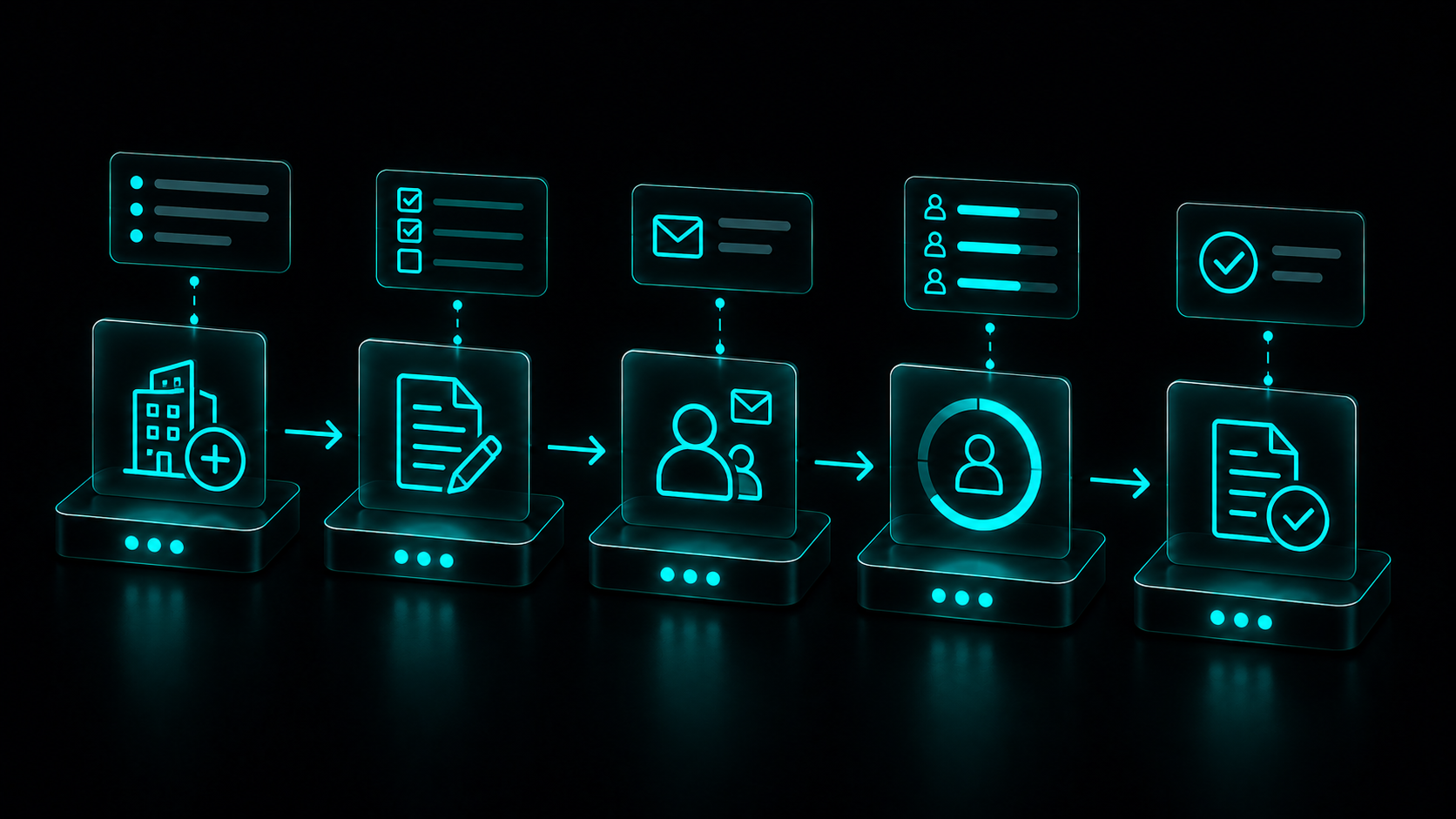
Supplier non-response covers five distinct failure points, from an invitation that's never opened to a completed profile nobody keeps current. Each has a different cause, so treating them as one problem is why reminders alone rarely fix it.
The easy explanation is that suppliers are busy. That's often true, but it can't be the whole story. Our analysis here at Risk Ledger found that the same onboarding process, run by different buying organisations, produced completion rates from under 20% to over 78%. Suppliers don't get five times busier depending on who's asking, something in the process does.
Five conditions decide whether a supplier responds:
Miss one, and the request stalls somewhere in the process. Miss several, and it's never attempted at all.
"Supplier didn't respond" hides five different problems: A supplier can ignore the invitation outright, open an account and go no further, start an assessment and abandon it, decline to connect with a specific client, or let a completed profile go stale.
Treat these as one "response rate" and you fix the wrong thing…
A wrong contact at Stage 1 needs better data, not a friendlier email. A stalled assessment at Stage 3 needs help from a colleague, not another reminder. Diagnose the stage before you chase.
Our Risk Ledger platform data - 4,069 supplier invitations across our client base - shows onboarding failure has less to do with the technology and more to do with how it's used.
Overall, around 77% of invitations were accepted. But that headline number hides the variable that actually matters.
Manual, personalised invitations were accepted roughly 82% of the time. Bulk invitations, sent to a generic contact with little context, landed at around 63%.
The gap widens further downstream: of suppliers who accepted, manual invitations converted to a completed assessment about 72% of the time, against 57% for bulk.
The sharpest evidence is client-level variance. Different organisations, running the same platform and the same workflow, saw invite-to-completion rates ranging from below 20% to above 78%.
One Risk Ledger customer, Virgin Money, reported 96.7% completion across 120 invitations - including a 92% completion rate on bulk-sent invites, well above the average for that method. So bulk isn't the problem, an unmanaged bulk send is.
If two organisations get five times the result from the same process, the process isn't the variable. What surrounds it is.
Most non-response isn't refusal, it's misdirection. In our rejection data, 17.1% of free-text rejections simply redirected the buyer to someone else - an account manager, a bids team, a DPO.
Another 5.4% cited outdated or incorrect contact information. Add in recipients who were never briefed and couldn't identify who should own the response, and wrong contact is the single biggest reason connection requests fail.
The invitation data backs this up. Generic addresses (info@, sales@, support@) get around 47% acceptance and just 27% invite-to-completion. Named contacts do far better on both.
A reminder sent to the wrong person isn't a follow-up strategy, it's essentially the same mistake, sent again.
You're asking a supplier to hand over sensitive security information. And so rejecting an unexpected request for that is rational, not obstructive.
In our rejection data, 8.4% of free-text rejections were relationship-verification problems - the supplier couldn't confirm the relationship existed, couldn't find an active contract, or genuinely didn't recognise who was asking. A further group asked outright why access was needed. This isn’t necessarily refusal, it's a supplier declining to act on a message they can't yet verify.
Suppliers should never have to decide whether a legitimate assurance request is a phishing attempt. If your process makes them guess, some will guess wrong and close it.
Send a buyer-owned primer before the platform invitation ever lands. It should cover, in plain terms:
Where possible, send it from a person or domain the supplier already recognises.
Supplier security work competes with paying, revenue-generating priorities. And so timing often decides which one wins.
One Risk Ledger customer saw this directly. During a live tender, two suppliers completed their profiles quickly because doing so was tied to winning the business.
Existing suppliers, with the contract already signed, showed far less urgency unless renewal was close. Same request, same platform, completely different response, because the commercial moment was different.
That pattern holds generally. Suppliers move faster when completion sits before contract signature, when a tender is still live, or when renewal is close enough to matter. They deprioritise it once the contract's signed and there's nothing left to win or lose.
The best time to secure supplier engagement is before the supplier has won the contract. After that point, you're asking for cooperation with no leverage attached to it.
Where you still have leverage, use it deliberately:
A supplier will rationally deprioritise a long assessment if it doesn't match what's actually at stake. Low-risk service, no sensitive data, no system access, a small commercial relationship - and yet they're facing the same form as your most critical supplier.
That mismatch doesn't just slow things down, it signals the request wasn't thought through, and suppliers respond to that accordingly.
This shows up constantly in our supplier feedback - over 200 pieces flag assessment length, irrelevant questions, or scope that doesn't match the relationship as a reason completion stalls.
One customer's experience makes the nuance clear: a full framework was excessive for small, niche suppliers with no meaningful access, but some of those same small suppliers still needed real scrutiny when they held sensitive data. Size alone didn't predict risk either way.
Proportionality isn't lowering the bar. It's applying the right bar to the right risk.
Scope the assessment to the relationship, not the supplier's size or your default template:
Not every non-response is a dead end dressed up as one. In our rejection data, 8.8% of free-text rejections pointed the buyer to an existing process instead - a trust centre, a security portal, a standard document pack. This is a supplier engaging, just not in the format you asked for.
Large providers do this constantly. They maintain one trust centre and expect every customer to use it rather than completing a bespoke questionnaire each time. From the supplier's side, that's a reasonable position - answering the same questions repeatedly for every customer doesn't scale for them either.
So instead of treating this as a rejection and escalating, work with what they've offered before assuming you need to fight for something else.
Before escalating, check what's actually on the table:
A supplier who offers a trust centre is still engaging, even if it’s not in the format you asked for.
Reminders feel like progress. Often they aren't. An automated reminder can't fix a bad contact, a disproportionate request, or a supplier with no commercial reason to prioritise you. Send the same email five times to the wrong person, and you get the same non-result five times.
Risk Ledger's supplier-engagement research found excessive reminders can actively backfire - duplicate emails, digests and repeated sequences create notification fatigue rather than urgency. Past a point, more reminders don't nudge a supplier toward finishing. They train them to ignore you.
The fix isn't fewer reminders. It's changing the intervention when the current one isn't working.
A working escalation model looks like this:
Some suppliers won't participate, regardless of how well you've run the process. Risk Ledger data puts this at roughly 5-10% of suppliers based on our platform data. Non-response isn't approval but it shouldn't leave you with nothing either.
Not every unresponsive supplier is the same problem, and they don't need the same response:
For that last group, the answer isn't more escalation. It's a fallback record:
Build a baseline instead of leaving a blank:
The point isn't to force every supplier through the same door. It's to make sure "pending" never becomes a permanent status that nobody's actually decided anything about.
We ask for a named contact at both invitation and connection stage, not a generic inbox, and we let suppliers redirect a request to the right person without killing the workflow - directly addressing the wrong-contact problem behind most rejections.
Suppliers maintain one security profile that's reusable across every connected customer, rather than starting from zero each time. A supplier can see the assessment isn't a one-off cost for one customer, but something that compounds.
We support small and full assessment frameworks with configurable domains, so the scope can actually match the relationship rather than defaulting to one template for everyone. Suppliers can bring colleagues in early and split sections between them, rather than one person carrying the whole response alone.
Discussions and remediation requests sit against the specific control they relate to, rather than scattering across email threads that go stale the moment someone changes role.
And when a supplier won't engage at all, unclaimed profiles let us hold categorisation, notes and documents against that supplier from day one - so a non-response doesn't mean starting the fallback record from a blank page later.
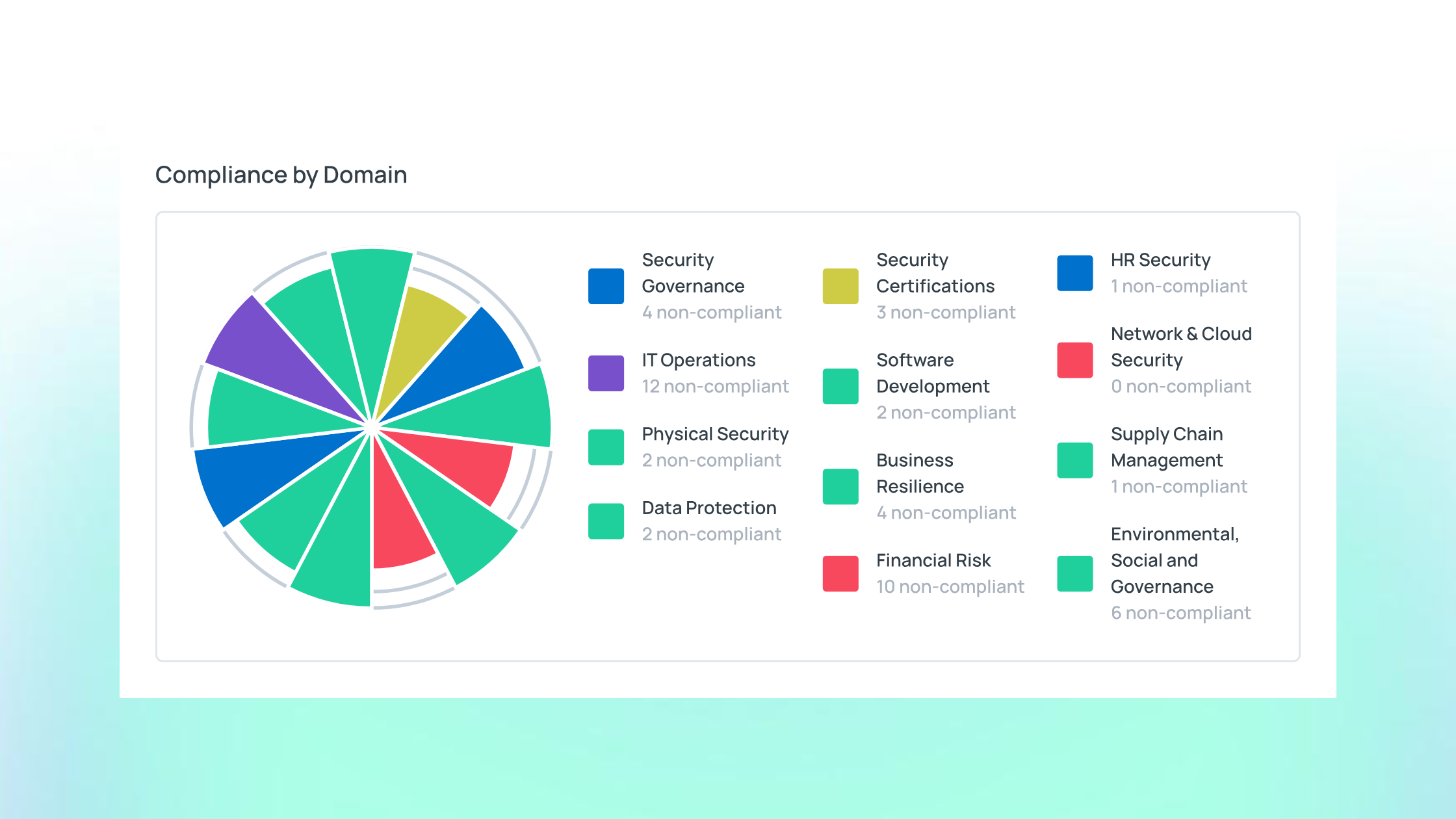
NCSC - Supplier assurance questions
NCSC - Phishing: defending your organisation
%20-%20thumb.png)

%20-%20thumb.png)

Monthly research, case studies and practical guides you won't find anywhere else.
Join thousands of security managers turning their TPRM programmes into success stories.

.svg)