By clicking “Accept”, you agree to the storing of cookies on your device to enhance site navigation, analyze site usage, and assist in our marketing efforts. View our Privacy Policy for more information.
Hellios Alternatives: How UK Security Teams Compare, Switch and Defend Their Choice
Comparing Hellios alternatives? See a side-by-side Hellios vs Risk Ledger table, current FSQS supplier fees, an evaluation checklist and switching steps.
Risk Ledger
|
Company
|
25
mins read
Share
Quick answer
Hellios alternatives are supplier assurance and third-party risk platforms that UK teams use instead of, or alongside, Hellios's FSQS community, and the real difference between them is how supplier evidence is collected, checked and kept current.
Hellios runs FSQS, a shared supplier qualification community for financial services, with validation of supplier submissions, buyer alerts and a separate pooled audit service.
Alternatives fall into five models: sector supplier communities, shared assessment exchanges, collaborative security networks, outside-in scanning and ratings tools, and GRC suites.
What separates them is who pays for suppliers to take part, how answers are checked, how evidence stays current after contract signature and what you can see beyond direct suppliers.
Some teams keep Hellios for broad qualification and add a security-focused platform alongside it rather than replacing it.
A supplier whose customer requires FSQS may still need to complete it, whichever other platform it uses.
The main Hellios alternatives are Risk Ledger, Achilles, ProcessUnity, Prevalent, Venminder, Omnea, UpGuard, and scanning tools such as SecurityScorecard and Bitsight. They differ less on features than on how supplier evidence is supplied, checked, paid for and kept current once the contract is signed.
Most teams start looking for one of three reasons: a renewal date is close, DORA has put the supplier register under scrutiny, or a critical supplier has stopped answering. Plenty of teams run third-party risk with one or two people, so the questions are practical ones. Which platform gets suppliers to respond? Which shows you the suppliers that matter most? And which keeps assurance going after signature, rather than letting it stop when procurement closes the file? You also need a choice you can defend to an auditor or a board. That holds whether you use Hellios today or are weighing it against something else. For some teams the right answer is to keep Hellios for broad financial services qualification and add a security-focused platform alongside it.
Alternatives covered in this guide
Risk Ledger: best for security teams that want suppliers to answer once, share with many customers and work through remediation in one place.
Achilles: best for buyers who want a sector supplier community similar in model to FSQS.
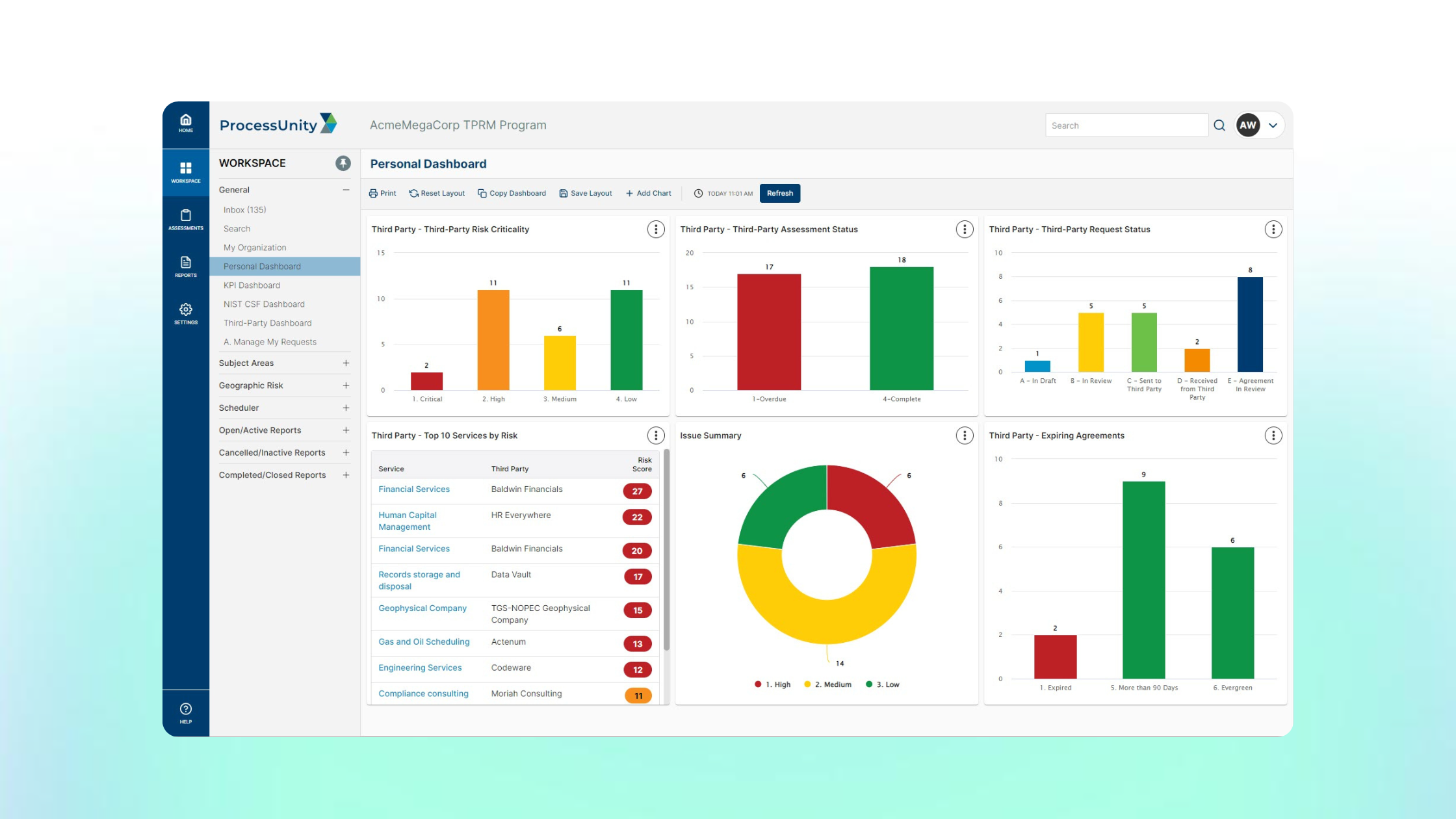
ProcessUnity: best for teams that need broader third-party risk workflow plus a shared assessment exchange.
Prevalent: best for teams that want a platform combined with managed assessment services.
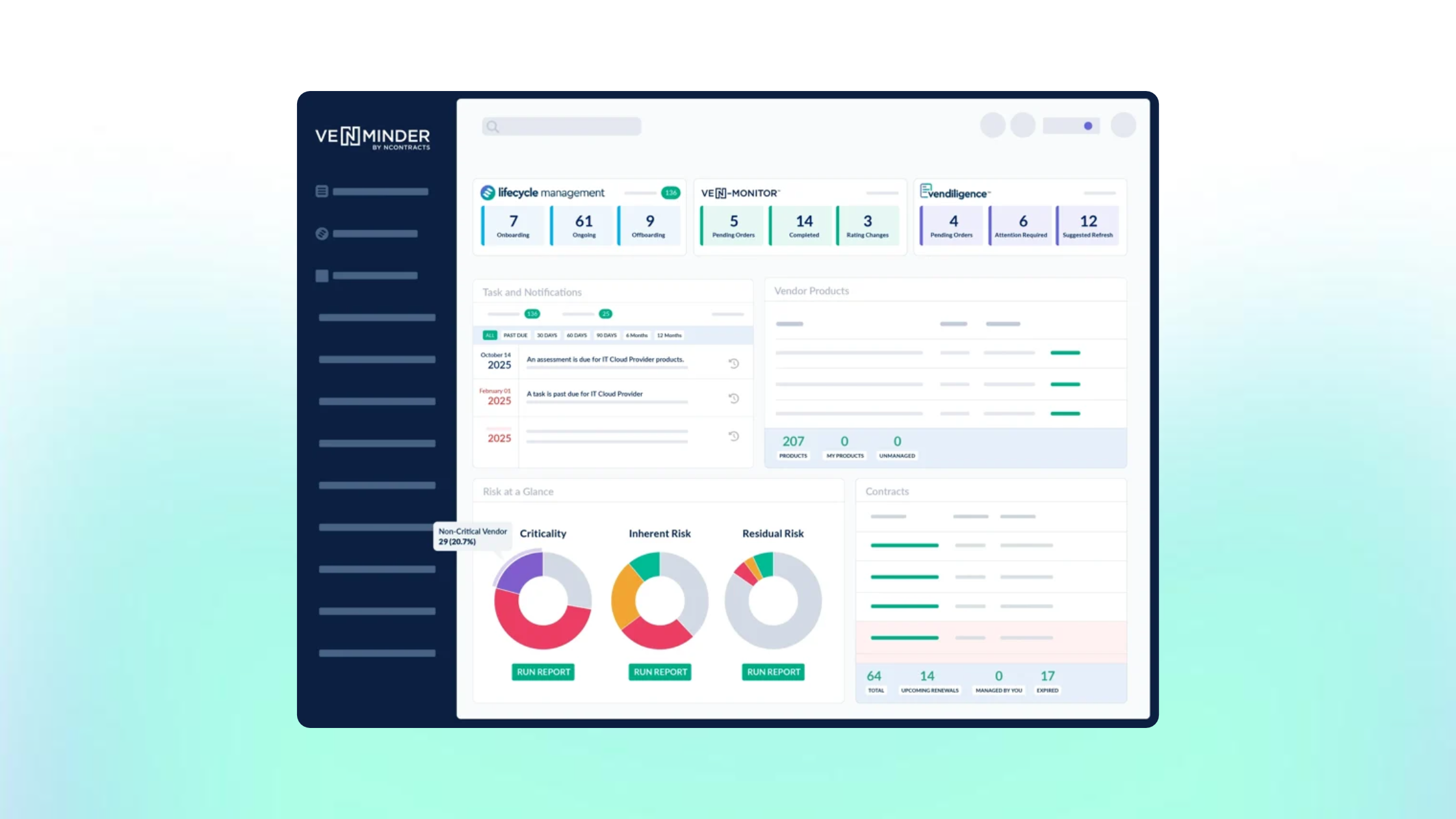
Venminder: best for teams that want vendor assessments carried out by outsourced analysts.
Omnea: best for procurement-led teams that want supplier intake and approvals with risk checks built in.
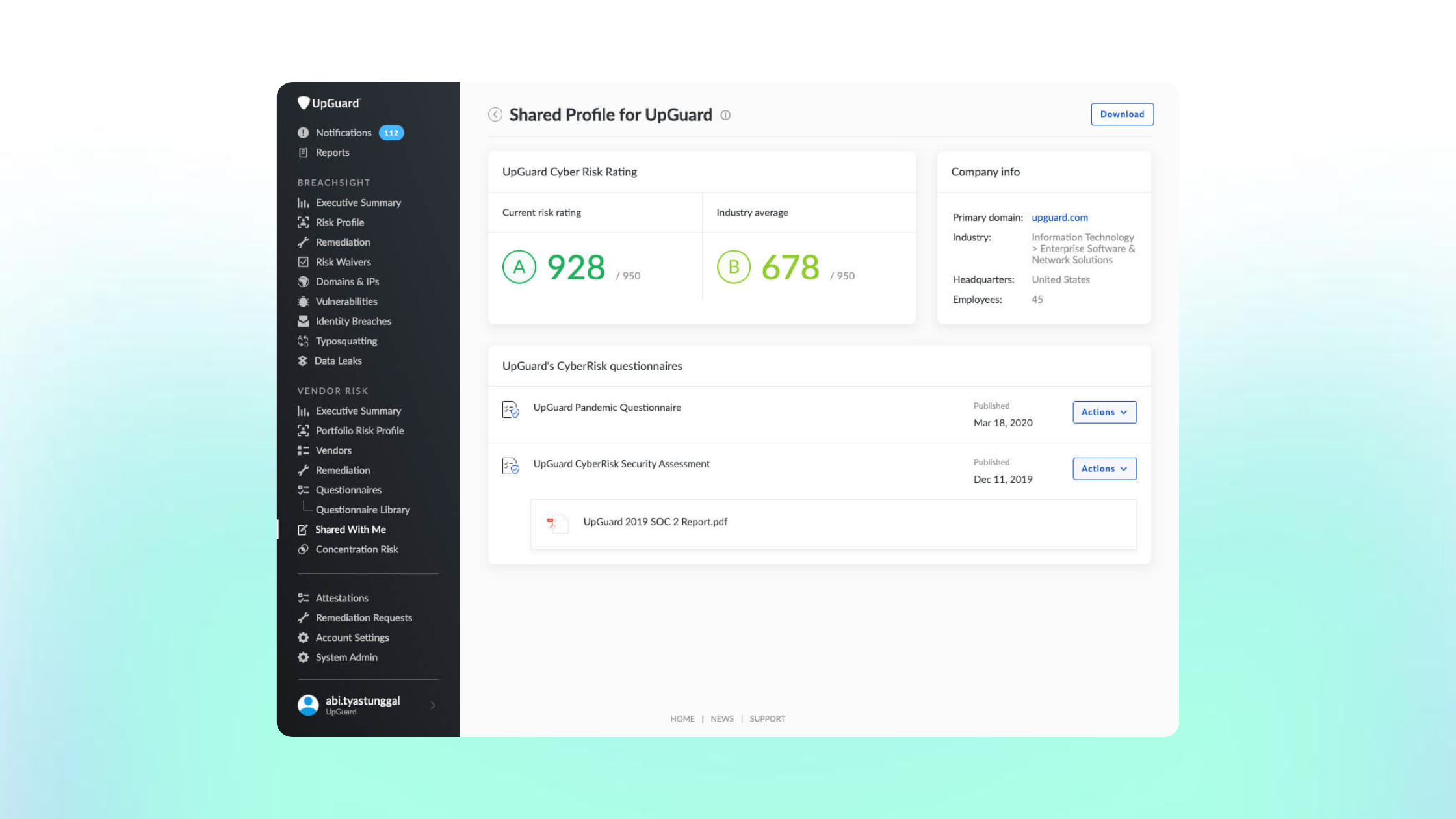
UpGuard: best for teams combining outside-in monitoring with supplier questionnaires.
Scanning and ratings tools (SecurityScorecard, Bitsight, BlueVoyant): best for outside-in technical signals that need no supplier participation.
This is not a ranking. The right choice depends on your regulatory duties, your supplier base and how many people you have to run the programme.
How we compared: each vendor’s own documentation, hellios.com, reviews on G2 and Gartner Peer Insights, and patterns from our conversations with financial services and public sector buyers. Risk Ledger wrote this guide, so our own platform gets the same structure and evidence bar, drawbacks included.
Hellios Information runs shared supplier qualification communities, and the best known is FSQS for financial services. Suppliers complete one validated profile that every participating buyer can view, instead of answering each buyer’s questionnaire separately.
Hellios runs three communities. FSQS covers financial services across the UK and Ireland, Spain, Northern Europe, Asia Pacific and North America. JOSCAR covers defence, aerospace and security, and ESSCAR covers energy.
FSQS does two jobs. The first is qualification. Stage 1 asks suppliers for organisation details, policies and core compliance information, and it is free for suppliers. Stage 2 is a more detailed assessment for suppliers whose services warrant it. Hellios’s validation team reviews submitted questionnaires before buyers rely on them.
The second job is deeper assurance. A pooled audit is a single review of a supplier, carried out once and shared with every buyer that needs it. FSQS Stage 3 is Hellios’s version of this. Buyers nominate their critical suppliers, and Hellios manages the review with delivery partners. The review builds on existing FSQS answers and on certifications such as ISO 27001 and SOC 2. It covers areas including cyber security, data privacy, business continuity and AI, and the supplier decides who can see the report.
FSQS at a glance
Three stages, two kinds of assurance
Stage 1
Qualification
What it coversOrganisation details, policies and core compliance information
Who checks itSupplier-provided, reviewed by Hellios's validation team
Supplier costFree
Stage 2
Detailed assessment
What it coversA deeper questionnaire for suppliers whose services warrant it
Who checks itSupplier-provided, reviewed by Hellios's validation team
Supplier costSubscription may apply, depending on company size
Stage 3
Pooled audit
What it coversCritical suppliers nominated by buyers, across areas including cyber security, data privacy, business continuity and AI
Who checks itHellios with delivery partners, building on FSQS answers and certifications such as ISO 27001 and SOC 2
Supplier costFee applies; see the supplier fee table
Source: hellios.com, checked 5 November 2026. Fees and scope can vary by community, region and supplier circumstances.
FSQS suits financial services firms that want broad supplier qualification, beyond cyber alone, through a process their peers and suppliers already recognise. Hellios markets it to procurement leaders as well as risk and resilience teams. Before planning any change, check who owns it in your organisation.
How do the alternatives to Hellios compare?
The alternatives to Hellios differ more by model than by feature count. Hellios runs a sector qualification community, Risk Ledger runs a collaborative security network, scanning tools observe suppliers from outside, and GRC suites run the buyer’s own workflow. Each model produces a different kind of evidence, so start with the job you need done.
There are two kinds of question to separate before you compare anything...
The first is qualification: is this supplier fit to do business with us?
The second is ongoing security assurance: is this supplier managing cyber risk well now, and what do we do when something changes?
FSQS was built mainly for the first. Security-focused networks and scanning tools were built mainly for the second. GRC suites hold the workflow and reporting for both, but they still need the supplier data to come from somewhere.
That split explains a pattern we see among some financial services buyers. They keep FSQS for qualification and add a scanning or ratings provider for technical depth. That’s a reasonable stack, and it sometimes leaves a different problem in place. Neither tool may show how your suppliers depend on each other, and running two contracts adds reviewer effort for a small team. The category columns in the table describe typical models, not every vendor. On external scanning depth and breadth beyond third-party risk, Risk Ledger is not the strongest option in the table.
Comparison table
Hellios and the alternative models, compared on ten questions
Pick a model to see how it handles evidence, supplier participation, currency and visibility. The final tab lists the question to put to every vendor on each row.
How we compared: Hellios details from hellios.com, checked 5 November 2026. The communities, scanning and GRC tabs describe typical models, not every vendor in them. Risk Ledger wrote this comparison, and our tab follows the same evidence bar, including where we are weaker.
Hellios (FSQS)
Sector qualification community
Hellios FSQS compared on ten questions
Best for
Broad financial services supplier qualification through an established community
Assessment model
One validated supplier profile shared with participating buyers, with a Stage 3 pooled audit for nominated critical suppliers.
Who pays
Stage 1 is free for suppliers. A Stage 2 subscription may apply depending on company size, and Stage 3 carries a supplier fee. Buyer membership is quoted.
How answers stay current
Renewal deadlines and status tracking. Buyers can follow suppliers for alerts on questionnaire status, documents and financial health score.
Evidence validation
A validation team reviews every submitted questionnaire. Stage 3 adds an independent review with delivery partners.
Supplier reuse
One profile shared with participating buyers in the community.
Nth-party and concentration visibility
Not published. Ask Hellios.
External scanning depth
Not its core model. Some buyers pair it with a scanning provider.
DORA register data
Hellios publishes DORA-focused material. Ask which register fields it supplies.
Breadth beyond third-party risk
Broad qualification across compliance and sustainability, not cyber only.
Contract and exit flexibility
Not published. Ask Hellios.
Risk Ledger
Collaborative security network
Risk Ledger compared on ten questions
Best for
Security-led supplier assurance and visibility beyond direct suppliers
Assessment model
Suppliers complete one standardised security assessment and share it with connected customers.
Who pays
Free for suppliers. Buyer pricing is quoted.
How answers stay current
Suppliers maintain a live profile shared with connected customers, and emerging threat workflows let buyers ask affected suppliers directly. How current an answer is depends on when it was last updated.
Evidence validation
Supplier-provided answers with supporting evidence for buyer review. Not an independent audit.
Supplier reuse
Answer once, share with many customers on the network.
Nth-party and concentration visibility
Supplier-declared fourth parties and concentration views, where suppliers provide and share them. Coverage varies.
External scanning depth
Lighter than specialist tools. Suppliers get free external scans of email, web, DNS and port security.
DORA register data
Supplies supplier and dependency data. Check the export against your register template.
Breadth beyond third-party risk
Security-focused. Not a GRC suite or a broad procurement qualification tool.
Contract and exit flexibility
Ask us for our standard notice period, exit terms and data export.
Other communities and exchanges
Typical model
Other supplier communities and assessment exchanges compared on ten questions
Best for
Reusing shared supplier data within a sector or exchange
Assessment model
A shared qualification or assessment exchange. Scope varies by vendor and sector.
Who pays
Varies. Some charge suppliers, some do not.
How answers stay current
Periodic reassessment or renewal, plus supplier updates.
Evidence validation
Ranges from self-attestation to analyst validation.
Supplier reuse
Reuse within the exchange.
Nth-party and concentration visibility
Varies. Often limited to the fourth parties suppliers list.
External scanning depth
Limited, or through partner feeds.
DORA register data
Varies by vendor.
Breadth beyond third-party risk
Varies. Some cover the full third-party lifecycle.
Contract and exit flexibility
Varies by vendor.
Scanning and ratings tools
Typical model
Scanning and security ratings tools compared on ten questions
Best for
Outside-in technical signals that need no supplier participation
Assessment model
Outside-in observation of internet-facing assets, scored or rated.
Who pays
Buyer pays. Supplier participation is not required.
How answers stay current
Continuous external signals. No view of internal controls.
Evidence validation
Inferred from observed data. Accuracy depends on correct asset attribution.
Supplier reuse
Ratings visible across customers. Not a supplier assessment.
Nth-party and concentration visibility
Some infer fourth parties from technology footprints.
External scanning depth
Deep. This is the core strength.
DORA register data
Not a register source.
Breadth beyond third-party risk
Narrow: external cyber posture.
Contract and exit flexibility
Varies by vendor.
GRC suites
Typical model
GRC suites compared on ten questions
Best for
Consolidating governance, risk and compliance workflow in one system
Assessment model
Buyer-built questionnaires and workflow inside a wider governance programme.
Who pays
Buyer pays.
How answers stay current
Reassessment schedules set by the buyer.
Evidence validation
Reviewed by the buyer's own team.
Supplier reuse
Mostly one-to-one collection. Some add exchange integrations.
Nth-party and concentration visibility
Limited to what the buyer records.
External scanning depth
Through integrations with ratings providers.
DORA register data
Often strong on register structure and reporting. The data still has to be collected.
Breadth beyond third-party risk
Broad: policy, risk, audit and compliance.
Contract and exit flexibility
Typically enterprise, multi-year terms.
What to ask each vendor
Questions for every shortlist
The question to ask every vendor on each comparison row
Assessment model
Is this a qualification record, a security assessment, an external rating or a workflow? Decides what kind of evidence you get.
Who pays
Who pays for a supplier to take part, and what happens if they refuse? Affects whether suppliers join at all.
How answers stay current
Between renewals, what tells me a critical supplier's answers have changed? Assurance often stops at contract signature.
Evidence validation
Who checks each answer, against what evidence, and can I see it? An answer is only as good as the check behind it.
Supplier reuse
Which of my suppliers already have a complete, current profile I can access? Cuts duplicated due diligence.
Nth-party and concentration visibility
Which of my suppliers' suppliers can I see, and who declared them? Shows where several suppliers depend on the same provider.
External scanning depth
Do you observe external signals, or rely on what suppliers tell you? The outside-in technical view.
DORA register data
Can you export the fields my register template needs, without manual rework? Feeds the register of information.
Breadth beyond third-party risk
What will I still need another tool for? Shows the real size of your stack.
Contract and exit flexibility
What are the notice period, exit clauses and data export terms? Multi-year terms delay switching.
Practical test
Find the row where your current process fails first. If it's how answers stay current, or what you can see beyond direct suppliers, you need a different model, and a better questionnaire won't fix it.
If it's breadth or independent audit, keeping FSQS and adding a security layer may serve you better than switching.
Forward this table with the evaluation checklist further down if you’re building the case internally. If you want to see where your own supplier base is exposed first, run the Supply Chain Risk Exposure Assessment.
How to test a platform’s supplier coverage claims
A coverage claim tells you how many of your suppliers a vendor says it already holds, and it is only as useful as its definition of “covered”. Buyers regularly dispute coverage percentages because each vendor counts something different. Test the claim with your own supplier list, and ask for results broken down by critical suppliers rather than an overall figure.
A supplier can appear “covered” at seven different stages, and each one means less work for you than the one before it:
The vendor has matched the right legal entity.
The supplier exists on the platform or in the community.
The supplier has connected with you or agreed to share.
Its assessment is substantially complete.
Its evidence is attached, accessible and current.
The specific service you buy, and its criticality, are captured.
Your own team has reviewed it.
Ask each vendor to report against each stage separately. Also ask how old the answers are, how they are refreshed, and who pays for an uncovered supplier to join. That last answer affects whether the gaps ever close.
Who are the main alternatives to Hellios?
The main alternatives to Hellios are Risk Ledger, Achilles, ProcessUnity, Prevalent, Venminder, Omnea and UpGuard, plus the scanning and ratings tools that some buyers run alongside Hellios. They don’t all do the same job. Some are sector communities, some are shared assessment exchanges or security networks, some are managed assessment services or procurement platforms, and some only monitor suppliers from outside.
Key takeaways
Hellios alternatives at a glance
Risk Ledger
Best forSecurity-led assurance and visibility beyond direct suppliers
Evidence modelSupplier-declared, with evidence for buyer review
Watch forNot an independent audit; lighter external scanning
Achilles
Best forAn FSQS-style community with external cyber signals
Evidence modelSupplier-provided, validated by Achilles, plus external data
Watch forBanking community focused on Southern Europe
ProcessUnity
Best forLifecycle workflow plus a large shared exchange
Evidence modelShared validated assessments alongside your own
Watch forConfiguration and admin effort
Prevalent
Best forA lifecycle platform with outsourced assessment options
Evidence modelSupplier-completed, with optional managed review
Watch forNetworks complement, not replace, one-to-one collection
Venminder
Best forTeams that want vendor reviews done for them
Evidence modelAnalyst-assessed by Venminder's team
Best forProcurement-led onboarding with risk checks built in
Evidence modelSupplier-provided through your own portal
Watch forSecurity depth and cross-customer reuse untested
UpGuard
Best forRatings and questionnaires in one cyber tool
Evidence modelInferred ratings plus self-attested questionnaires
Watch forNo internal control view from ratings alone
Scanning and ratings tools
Best forTechnical depth on suppliers who won't respond
Evidence modelInferred from external observation
Watch forAttribution errors; resolving findings still needs the supplier
Vendor details checked on each vendor's own site, 5 November 2026. Risk Ledger wrote this guide and applies the same evidence bar to its own entry.
Risk Ledger
Risk Ledger is a collaborative security network. Suppliers complete one standardised security assessment, share it with every connected customer, and pay nothing to take part.
Strengths
Suppliers already on the network don’t have to fill in the same assessment again for each new customer.
Free supplier participation removes a common objection to joining.
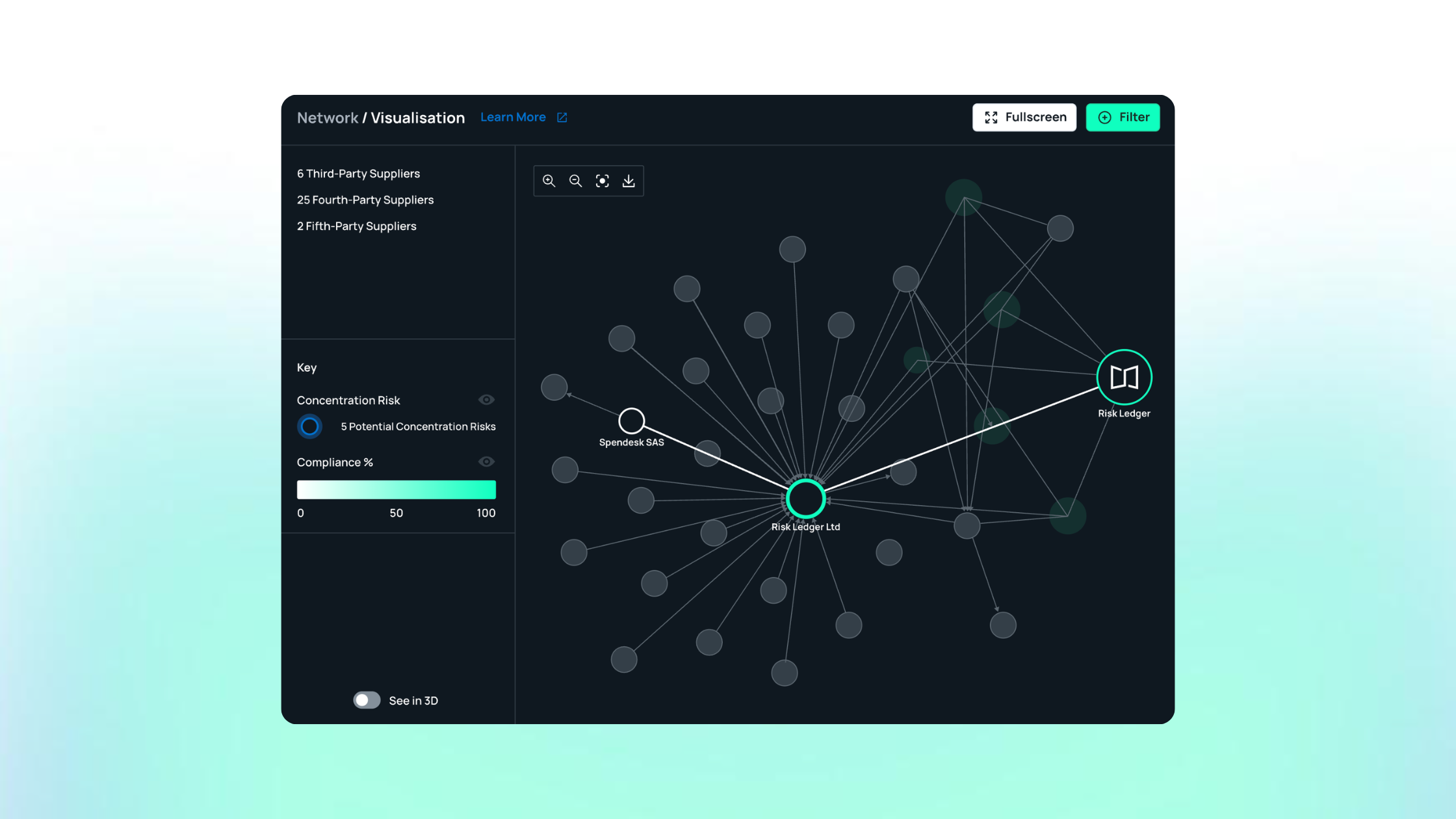
Suppliers can declare their own suppliers (fourth parties), which shows where your suppliers depend on the same providers.
Emerging threat workflows let you ask the affected suppliers about a specific incident directly.
Drawbacks
External scanning is lighter than in specialist tools.
It does not cover broad procurement qualification or wider GRC.
Best use case
Security teams that need suppliers to respond, want assurance to continue after signature, and need to see shared dependencies.
Achilles
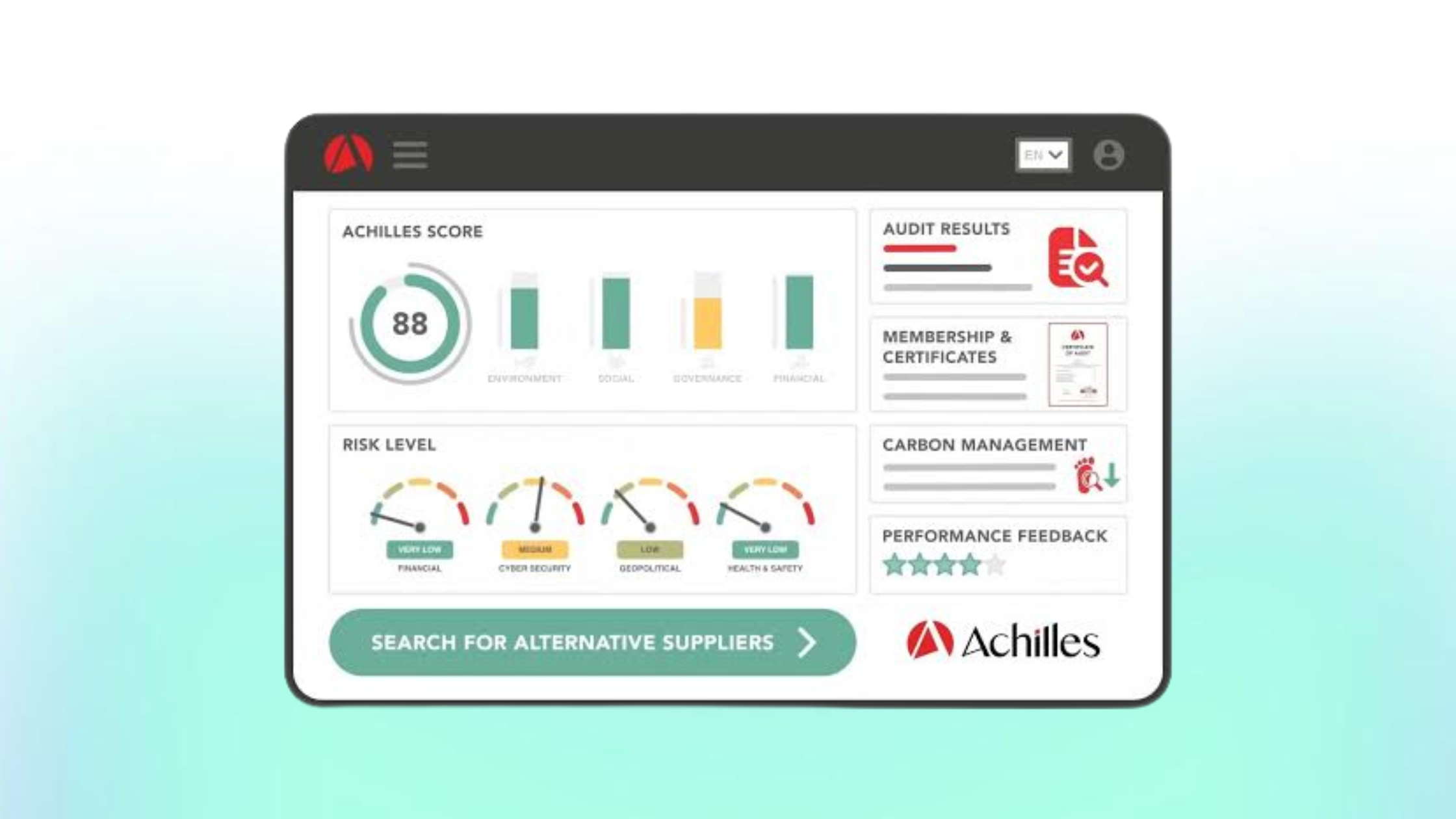
Achilles runs supplier qualification communities across several sectors, including a Banking & Insurance community it positions for Southern Europe.
Strengths
The model is close to FSQS. Suppliers complete a sector questionnaire with evidence, and Achilles reviews and validates it.
Buyers can add their own requirements on top of the shared questionnaire.
External cyber intelligence from Orpheus supplements the questionnaire answers.
Coverage spans cyber, financial, compliance, ESG, geopolitical and health and safety risk.
Drawbacks
The banking community’s stated focus is Southern Europe, so test how many of your UK suppliers it already holds.
Like FSQS, it leads with broad qualification. Cyber depth depends on the scope you buy.
Best use case
ProcessUnity
ProcessUnity is a configurable third-party risk platform. It runs the Global Risk Exchange, a shared assessment network formerly known as CyberGRX.
Strengths
ProcessUnity reports more than 18,000 validated assessments and 370,000 vendor profiles in its exchange.
Workflow covers the full third-party lifecycle.
It publishes solution pages for DORA and the PRA’s SS2/21.
AI control review and threat and vulnerability response modules are available.
Drawbacks
Its configurability brings setup and administration effort.
How much of the exchange covers UK financial services suppliers needs testing against your own list.
Best use case
Mature programmes with dedicated resource that want lifecycle workflow and exchange data in one platform.
Prevalent
Mitratech Prevalent is a third-party risk platform for assessment, monitoring and remediation across the vendor lifecycle. It comes with vendor intelligence networks and managed services.
Strengths
You can hand assessment collection and analysis to Mitratech’s managed services team.
Its networks hold thousands of completed, standardised assessments.
Coverage runs from onboarding to offboarding.
Drawbacks
Mitratech positions its networks as a complement to one-to-one assessments, not a replacement, so expect to keep collecting directly from many suppliers.
Best use case
Teams that want a lifecycle platform with the option to outsource assessment work.
Venminder
Venminder, part of Ncontracts, combines a vendor risk platform with outsourced control assessments carried out by its own analysts.
Strengths
Analysts assess vendors’ information security, data protection, cyber security and financial health for you.
A library of completed assessments is available.
G2 reviewers rate it 4.7 out of 5 across 115 reviews and highlight its guidance and support.
Drawbacks
Ncontracts’ customer base is mainly US financial institutions, so check its coverage of UK suppliers and UK regulatory requirements.
Outsourced assessments add cost per review.
Best use case
Teams short of analyst capacity that want vendor reviews done for them.
Omnea
Omnea is a London-founded procurement and supplier management platform with third-party risk checks built into intake, onboarding and renewal.
Strengths
Purchase requests, approvals, onboarding and risk reviews sit in one workflow.
A supplier portal collects information directly from vendors.
It fits well where procurement owns supplier onboarding.
Drawbacks
Collection runs through your own supplier portal, so ask whether suppliers’ answers can be reused across Omnea customers.
Security assessment depth and visibility beyond direct suppliers need testing.
Best use case
Procurement-led organisations that want risk checks embedded in buying.
UpGuard
UpGuard is a cyber risk platform combining security ratings, vendor questionnaires and AI analysis of vendor documents.
Strengths
UpGuard says its ratings update multiple times a day, with daily scanning between assessments.
Its questionnaire library includes NIST, ISO, SIG and a DORA questionnaire.
AI analysis of vendor documents reduces evidence chasing.
Drawbacks
Ratings are inferred from external signals, so they don’t show how a supplier manages security internally.
Reviewers most often raise limited reporting customisation.
Best use case
Teams that want ratings and questionnaires in one cyber-focused tool.
Scanning and ratings tools
SecurityScorecard, Bitsight and BlueVoyant rate or monitor suppliers’ internet-facing security without needing the supplier to take part. BlueVoyant adds managed services on top.
Strengths
They cover suppliers who won’t respond to questionnaires.
They provide continuous external signals.
They support peer benchmarking.
Drawbacks
They give no view of internal controls.
Findings can be misattributed.
Resolving a finding still means engaging the supplier.
Some financial services buyers keep Hellios for breadth and add a scanning or ratings tool for technical depth. This works when the team has the budget and people to run both. The costs are easy to underestimate:
Two contracts and two renewal dates
Two supplier experiences
Two sets of reviewer effort
The larger question is whether either tool shows how your suppliers depend on each other. Smaller organisations tell us they can’t fund two tools at once, and that changes the decision. Before you pair them, separate what each tool tells you. A scan shows the outside-in technical view. A qualification profile shows what a supplier has declared and Hellios has validated. Neither shows that a supplier’s controls changed last month, unless the supplier tells you.
Buyers we speak to raise three limitations of Hellios:
Supplier fees can slow participation
A qualification-first scope can leave security teams wanting more cyber depth
And multi-year contracts delay switching.
Start with what works. Buyers value how many financial services suppliers already sit in FSQS. That is why many keep it alongside other tools rather than replacing it. The community is still growing, too: Hellios launched FSQS in the Nordic region in January 2025 and in North America in late August 2026.
Supplier fees are the limitation buyers raise most often. Hellios says the fees cover the cost of running the system. Stage 1 is free. Stage 2 costs £2,100 a year as standard, £950 for an eligible medium-sized enterprise, and nothing for small or micro enterprises. Stage 3 costs £4,950 a year.
The exemptions mean many smaller suppliers pay nothing. The full fee falls on larger organisations, and those include many of the technology providers a bank treats as critical. One financial services security lead put the problem plainly: “If we can’t get people to do it now, we’re definitely not going to get them to do it by charging them.”
A fee is not a refusal, and many suppliers pay it to keep their qualification. It does add one more reason for a slow supplier to stay slow.
Cyber depth is the second limitation, and it starts with a distinction. Validation means someone checks that an answer is complete and supported. Independent testing means someone checks that the control actually works. FSQS validates every Stage 1 and Stage 2 submission. Deeper testing comes through a Stage 3 pooled audit, but only for suppliers that buyers nominate.
Two questions are worth putting to Hellios and to every alternative:
Is each answer backed by evidence you can inspect, or is it, as one public sector buyer put it, “a better questionnaire, not validation”?
How does a change to a critical supplier’s security reach you between renewals?
Contract length is the third. One financial services buyer we spoke to had signed a three-year Hellios contract and was adopting other tooling alongside it. Suppliers face a version of the same constraint. If their customers require FSQS, the requirement stays in place whatever else the buyer adds.
Hellios vs Risk Ledger: how the two networks differ
Hellios and Risk Ledger both run shared supplier networks, but they do different jobs.
Hellios’s FSQS is a financial services qualification community, with validation and an optional pooled audit, and some suppliers pay to join. Risk Ledger is a security-focused network. Suppliers maintain one assessment free of charge, and buyers keep working with them on risk after onboarding.
The difference shows most after a supplier joins. In FSQS, the supplier’s profile is validated, renewed against a deadline and followed for status alerts. Buyers can go deeper on nominated suppliers through a Stage 3 audit. On Risk Ledger, the supplier keeps one assessment current, and every connected customer sees changes as they happen. Buyers raise findings with the supplier, ask about specific incidents through emerging threat workflows, and can see the critical suppliers it relies on, if the supplier has declared them.
Head-to-head
Hellios vs Risk Ledger, row by row
How FSQS and Risk Ledger compare on the questions that decide a switch, a pairing or a stay, with what to establish with both vendors before you choose.
How we compared: Hellios details from hellios.com, checked 5 November 2026. Risk Ledger wrote this table, and our column includes where we are weaker.
Hellios FSQS and Risk Ledger compared, with questions to ask both
What to compare
Hellios (FSQS)
Risk Ledger
What to establish with both
Built for
Qualifying suppliers to do business with financial services firms.
Managing supplier security risk on an ongoing basis.
Is your main job qualification, ongoing cyber assurance, or both?
Who is already there
Nearly 75 financial organisations as buyers, by Hellios's count, across the UK and Ireland, Spain, Northern Europe, Asia Pacific and North America.
Organisations across public sector, critical national infrastructure, financial services, insurance and technology.
How many of my critical suppliers are already there, with complete and current answers?
Supplier cost
Stage 1 free. Stage 2 £2,100 a year, £950 for eligible medium enterprises, free for small and micro. Stage 3 £4,950 a year. Excludes VAT.
Free for suppliers.
What is the whole cost, including buyer licence, supplier fees and internal effort?
What a supplier completes
Stage 1 and Stage 2 questionnaires set by the community, renewed against a deadline.
One standardised security assessment mapped to ISO 27001, Cyber Essentials, NIST CSF and the NCSC CAF, with optional product-level answers, AI questions and critical fourth parties.
Can I read the answers against the standards I report to?
Who checks the answers
Hellios's validation team reviews every submission.
Supplier-provided answers with supporting evidence, reviewed by each buyer's own team.
Who checks each answer, against what evidence, and can I inspect it?
Independent testing
Stage 3 pooled audit with delivery partners, for suppliers buyers nominate.
No independent audit. Certifications such as ISO 27001 and SOC 2 reports can sit in the supplier's profile.
Which suppliers genuinely need independently tested controls?
Staying current
Renewal deadlines, plus follow alerts on questionnaire status, documents and financial health score.
Live connections. When a supplier updates an answer or renews a certificate, connected customers see it.
What reaches me between renewals, and how quickly?
Fixing issues
Not published. Ask Hellios.
Buyers raise findings, record exceptions and track remediation with suppliers in the platform.
How do I get a supplier to fix something, and keep a record of it?
Incident response
Not published. Ask Hellios.
Emerging threat workflows to ask affected suppliers about a specific incident.
When a new vulnerability lands, how quickly can I hear from affected suppliers?
Beyond direct suppliers
Not published. Ask Hellios.
Supplier-declared fourth parties and concentration views, where suppliers share them. Coverage varies.
Who declared each relationship, and how complete is the picture?
Breadth
Compliance, financial, sustainability and ESG as well as cyber.
Security-focused. Not procurement qualification or GRC.
Which non-cyber domains are mandatory for your organisation?
Where it is weaker
Cyber depth for suppliers outside Stage 3. Fees for suppliers above SME thresholds.
No independent audit. Lighter external scanning. No non-cyber qualification.
Which weakness matters for your critical suppliers?
Practical decision rule
If a customer, regulator or your own procurement policy requires FSQS, keep it, and judge Risk Ledger only on what it adds after onboarding.
If nobody mandates FSQS and your problem is suppliers who won't respond, or not knowing who depends on whom, test both on the same sample of your critical suppliers before you renew.
When Hellios is the better fit, when Risk Ledger is, and when you need both
The quickest way to decide is to start from the problem you actually have.
“Our procurement team needs suppliers qualified across finance, ESG and compliance, not just cyber.” Hellios fits better. FSQS covers those domains, and Risk Ledger does not.
“We need independently tested controls for a handful of critical suppliers.” Hellios fits better, through a Stage 3 pooled audit.
“Our suppliers won’t answer us, and some won’t pay to take part.” Risk Ledger fits better. It costs suppliers nothing, and our team helps bring suppliers onto the platform.
“Our assurance stops when the contract is signed.” Risk Ledger fits better. Supplier changes reach you through the connection, without a new request.
“We need to know which suppliers rely on the same cloud provider.” Risk Ledger fits better, as long as suppliers have declared their critical dependencies.
“Procurement mandates FSQS, but security needs ongoing engagement.” You need both. Keep FSQS for qualification and judge Risk Ledger on what happens after onboarding.
What does “continuous” actually mean?
Continuous monitoring describes how a platform learns that something about a supplier has changed between formal assessments. Vendors use the term for at least six different things, and they aren’t equivalent:
External telemetry: signals observed from outside, with no input from the supplier.
External risk feeds: for example, sanctions, adverse media or financial health alerts.
Supplier-initiated updates: the supplier changes an answer or renews a certificate.
Workflow events: alerts when a document expires or a review is due.
Periodic reattestation: the supplier confirms that its answers still hold.
Human follow-up: a buyer asks a supplier directly about a new threat.
FSQS’s published alerts cover workflow events and a financial health score. Risk Ledger relies mainly on supplier-initiated updates and human follow-up, with lighter external signals. Neither platform covers all six, so ask each one which types it offers and how quickly each reaches you.
A supplier due diligence and onboarding platform should replace manual Word and Excel questionnaires with structured assessments, evidence-backed validation of answers, continuous monitoring after contract signature, and a way to reach suppliers who do not respond. For a small team, the real test is how much reviewer effort each of those saves.
Structured assessments come first. Questionnaires remain a useful way to gather evidence. The problem is collecting the same answers one supplier and one customer at a time, in a different format each time. One public sector security lead summed it up: “We all have to do our own due diligence and it’s like, well. But why?” A platform should let a supplier’s answers be reused, and it should let you compare suppliers against the same baseline.
Evidence matters more than answers. An answer tells you what a supplier says it does. Evidence, such as a certificate, a policy or a test report, shows whether that claim holds. AI is now changing both sides of this exchange. Vendors sell tools that draft questionnaire answers for suppliers: UpGuard offers Questionnaire AI and ProcessUnity offers Assessment Autofill. They also sell tools that review those answers for buyers. When software writes the answer and software reads it, the attached evidence is what an auditor will still ask for.
Assurance has to continue after signature. “It was really strong up until they signed the contract. And then we just walked away and forgot about it completely,” one public sector buyer told us. The fix isn’t an annual questionnaire. It’s a way for changes to reach you between reviews.
Some suppliers will never answer, and a platform should account for that. Some sit behind a managed service provider that nobody can reach. Others refuse outright. In parts of the public sector there’s no contractual lever to make them comply. Ask each vendor what happens with these suppliers: whether its team chases them, whether it supplies any external view, and how a gap is recorded.
Common shortcuts
Four due diligence shortcuts, and what they quietly miss
Sending a better questionnaire
Feels likeMore thorough due diligence
Actually missesWhether any answer is backed by evidence you can inspect
Annual reassessment
Feels likeOngoing monitoring
Actually missesEverything that changes in the eleven months between reviews
Chasing suppliers harder
Feels likeBetter engagement
Actually missesSuppliers behind managed service providers, and those with no reason to reply
AI-drafted answers
Feels likeFaster assessments on both sides
Actually missesThe evidence an auditor will still ask to see
Treat AI claims with care. “Companies tend to over promise and under deliver when it comes to AI,” one financial services security lead said. That scepticism is useful. Ask which steps AI performs and what evidence it cites. Ask who checks its output before a risk decision is recorded. An AI summary you can’t trace back to the supplier’s evidence is a liability in an audit.
Size the platform to the team you actually have. Many organisations run third-party risk with one or two people. “It is a team of one right now,” one public sector lead said. For a team that size, the features that matter most are the ones that remove work: reused supplier answers, evidence attached to answers, supplier chasing handled for you, and alerts only on changes that matter. Features that add configuration, custom scoring or bespoke reporting only pay off once someone has time to maintain them.
How to evaluate a Hellios alternative: a checklist to take to your manager
Evaluate a Hellios alternative in two passes. First, rule out any vendor that fails a requirement you can’t move on. Then score the rest on evidence, supplier participation, how answers stay current, visibility, operating effort and exit terms, before you look at price. That way the final choice is one you can explain to an auditor or a board.
Mandatory gates come first, because a weighted score can hide a fatal gap. A vendor shouldn’t win on average if it fails something you need:
A customer or regulator requires FSQS qualification
Specific suppliers need independently tested controls
You must produce a set reporting output, such as your register template
Your own security, privacy or procurement policies set conditions
Agree the weights before any vendor presents. In a weighted RFP, each vendor gets a quality score from criteria like the ones below and a separate price score, combined using a split agreed in advance. Fixing the split and the weights early stops a strong demo or a low price from reshaping the criteria afterwards. The weights shown here are a starting point. A team running a low-friction cyber programme might weight supplier participation higher. A regulated procurement team might put more on assurance breadth and independent audit.
Evaluation checklist
Score every Hellios alternative on the same checks
Weights are a starting point out of 100. Adjust them with your team before any vendor presents, and score price separately.
Evaluation checklist for a Hellios alternative, grouped by weighted criterion
Check
What good looks like
Ask the vendor
Evidence and validation 25
Evidence behind answers
Certificates, policies and reports attached to the answers they support.
Who checks each answer, and can I inspect the evidence?
Independent testing
A clear route to tested controls for the suppliers that need them.
Which suppliers can be independently audited, and by whom?
Cyber depth and action 20
Answers after signature
Changes reach you between reviews without a new request.
What tells me a critical supplier's answers have changed?
Remediation
Findings raised, tracked and closed with the supplier, on record.
How do I get a supplier to fix something, and prove it later?
AI explainability
Every AI output traces back to supplier evidence, with a human check.
What does AI do here, what does it cite, and who signs it off?
Supplier participation and coverage 15
Coverage of your suppliers
A match test on your own list, reported for critical suppliers separately.
How many of my critical suppliers are complete and current today?
Reluctant suppliers
A plan for suppliers behind managed service providers and those who refuse.
Who chases, and how is a gap recorded?
Who pays
Supplier costs that won't put off the suppliers you need.
What does a supplier pay to take part, if anything?
Operating effort 15
Reviewer effort
A programme one or two people can run week to week.
How many hours a week does a team our size spend in the platform?
Support
Named support, with help onboarding suppliers.
What does your team do for us, and what do we do ourselves?
Visibility and incident response 10
Beyond direct suppliers
Shared dependencies shown, with who declared them.
Which of my suppliers' suppliers can I see, and how complete is it?
Incident response
A fast way to ask only the affected suppliers about a new threat.
How long from a new vulnerability to answers from affected suppliers?
Integration and reporting 10
Register and audit outputs
Exports that match your register template and audit evidence needs.
Can you export the exact fields I report, without rework?
Integrations and certifications
Connections to your GRC or procurement tools, and a vendor with its own certifications.
Which integrations exist today, and which certifications do you hold?
Whole-system cost and exit 5
Exit terms and data export
Clear notice periods, exit clauses and a full export of your records.
What can we take with us if we leave, and in what format?
Brief your manager
Three lines to paste into an email:
We use [current tool] today, and it renews on [date] with [notice period] notice.
The gaps that matter most to us are [gap one] and [gap two].
Our shortlist is [vendors], and the next step is a sample test on [number] of our critical suppliers by [date].
Test on your own suppliers, not the vendor’s demo data. Pick a small sample of your critical suppliers that includes four kinds:
suppliers already on the platform
suppliers with incomplete profiles
suppliers new to it
suppliers you know are slow to respond
For each one, record the time from invitation to usable evidence, the hands-on hours on both sides, the number of follow-ups, and how old the evidence is. Then run a simulated incident and time how long it takes to get answers from the affected suppliers. A test made up only of suppliers who already have complete profiles will flatter whichever vendor happens to hold them.
What drives the cost of a Hellios alternative?
Third-party risk platforms rarely publish buyer prices, so expect to ask for a quote. The quote will depend on:
How many suppliers are in scope
How deep each assessment goes
Which modules you take
Whether you add managed services
Who pays on the supplier side varies more than buyers expect. Hellios publishes its FSQS supplier fees, with exemptions for smaller suppliers. Risk Ledger is free for suppliers. Scanning tools need no supplier participation at all.
The real comparison is total cost, not licence cost. Running Hellios alongside a scanning tool means two licences, two renewal dates and two sets of reviewer effort. Internal analyst time is usually the largest cost of all, and it rarely shows up in a quote. Smaller organisations feel this most. “The cost model is just prohibitive for an organisation our size,” one public sector buyer told us.
Ask for indicative pricing early, before a long evaluation commits you to a vendor you can’t afford. For the business case, give directors two figures: the cost per supplier assured, and the analyst time saved compared with your current process.
In contract with Hellios? When and how to switch
Plan any switch around your contract end date, not around a vendor’s sales cycle. Check your notice period first, then work backwards. Finish the evaluation before notice is due, export your records, run both tools side by side for a short period, and re-engage your suppliers early.
Switching isn’t always the right move. If your customers or your procurement policy require FSQS, leaving Hellios won’t remove that requirement. Your suppliers may also still need FSQS for their other customers. In that case the decision is whether to add a security platform alongside Hellios, and the steps below still apply. You’d be adding a tool rather than replacing one.
Switching timeline
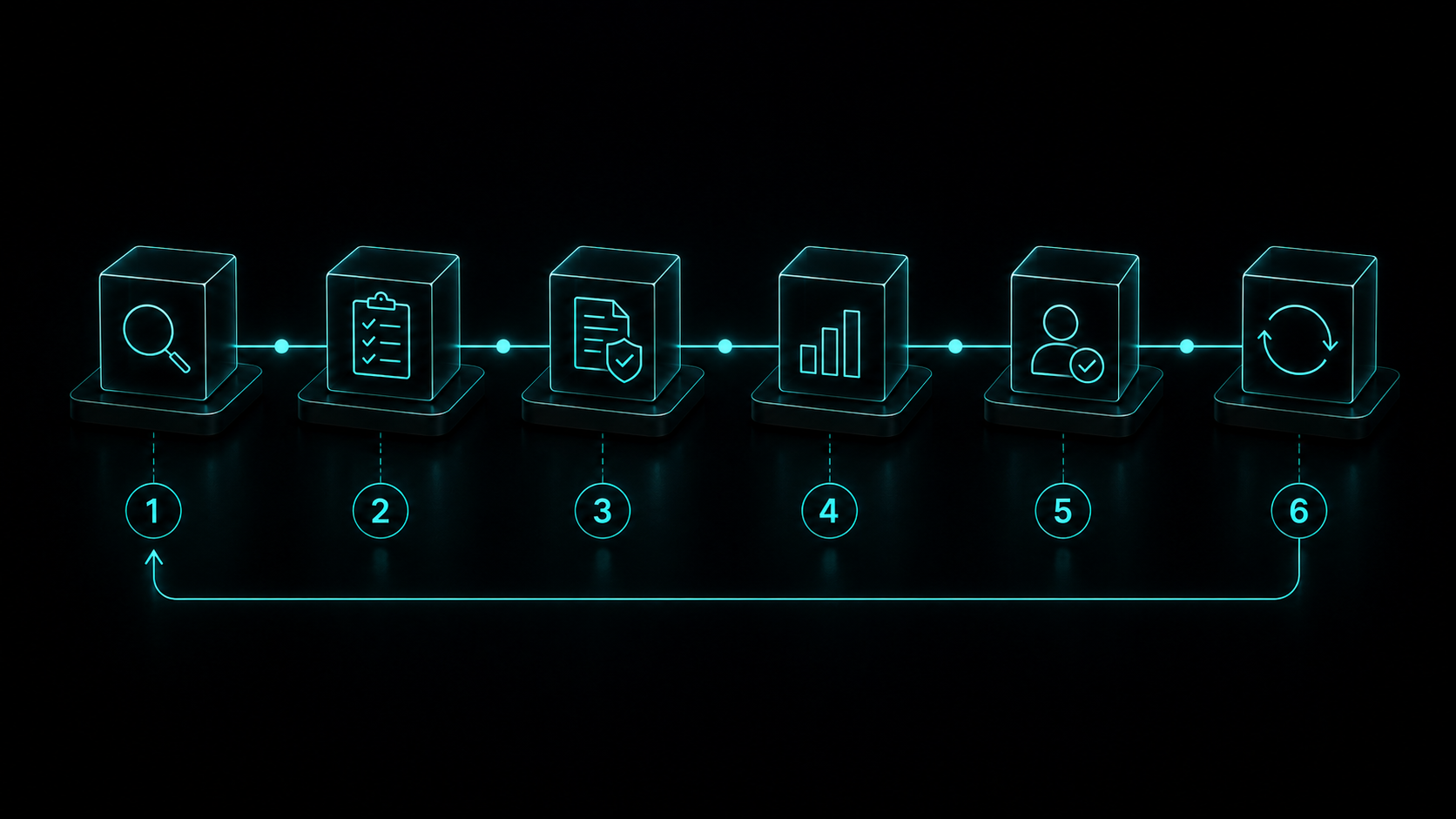
Five steps, planned back from your contract end date
1
FirstFind your datesRenewal date, notice period and any minimum term in your current contract.
2
Before notice is dueEvaluate and testShortlist, score and run a sample test on your own critical suppliers.
3
Once you decideExport and planExport records and history, and agree exit terms with the new vendor.
4
Before contract endRun in parallelMove critical suppliers first while the old tool stays live.
5
At cut-overBrief and closeBrief internal audit, confirm every critical supplier is covered, then retire the old tool.
Timing your switch around a Hellios contract
The notice deadline drives everything else, so find it before you speak to any vendor. Multi-year terms are common in this market. We’ve seen a financial services buyer adopt new tooling while still tied into a three-year Hellios contract. Running two tools in parallel at that point means paying for both.
Start the evaluation well before your notice deadline. A sample test on your own suppliers takes longer than a demo, and procurement approval adds more time on top. If you sign a new multi-year deal, ask for exit clauses and a data export commitment in writing. Buyers we speak to ask for exit terms even on long contracts, and a vendor that resists is telling you something.
Migration pitfalls to avoid
Most problems in a switch come from five avoidable mistakes:
Leaving the export too late: Download supplier records, assessment history and supporting evidence before your access ends. Get confirmation of what you can take, and in what format.
Losing assessment history: Auditors will want to see why a supplier was approved two years ago, not just its current status. Keep the old records somewhere you can still produce them.
Re-onboarding fatigue: Suppliers who have just completed FSQS won’t want to start again from scratch. Tell them what’s changing and why. Ask first for anything they already hold, such as certifications, and prioritise your critical suppliers.
Skipping the parallel run: Running both tools in parallel means keeping the old one live while suppliers move to the new one. Without it, you lose cover for any supplier still in transition.
Surprising your auditors: Brief internal audit and, where relevant, your regulator contact before the change. Explain how continuity of assurance is maintained.
Where we fit at Risk Ledger, and where we don’t
Risk Ledger is a collaborative supplier security network for teams that need three things: suppliers who respond, assurance that continues after signature, and visibility beyond direct suppliers. It isn’t a GRC suite, a procurement qualification scheme or a deep external scanning tool. Many of our customers run it alongside one of those.
We built it around a simple idea. Risk Ledger adds a collaborative network that lets suppliers answer once and share with many customers, free to the supplier. Supplier answers stay connected after onboarding, so changes reach every customer without a new round of requests. When a new threat emerges, you can ask only the affected suppliers about it.
Because suppliers can declare who they rely on, connected customers can see where several of their suppliers depend on the same provider. Buyers evaluating us have described that view as something “nobody else does”. It is only as complete as the declarations behind it, and we show you who declared each relationship.
There are clear cases where we’re the wrong core choice:
You need broad supplier qualification across finance, ESG and compliance: FSQS or another sector community does that better.
Specific suppliers need independently tested controls: A pooled audit or a specialist assessor fits better.
You need wide governance and policy workflow: A GRC suite does that. Your security evidence can feed into it from us.
Outside-in technical depth matters most: Pair us with a scanning provider rather than expecting us to replace one.
No. Hellios Information is a supplier assurance provider that runs FSQS for financial services, JOSCAR for defence, aerospace and security, and ESSCAR for energy. Helios is an unrelated name used for developer observability tools and a camera lens. Third-party risk comparisons that mix the two are usually listing the wrong products.
Is FSQS mandatory for suppliers?
Only if a customer requires it. FSQS is not a legal requirement, but some financial services buyers make it a condition of doing business. If a customer has asked you to join, check with them before assuming another platform will do. Stage 1 registration is free, and smaller suppliers may pay nothing at Stage 2.
Can we use Hellios and Risk Ledger together?
Yes, and some organisations do. A common split is to keep FSQS for broad supplier qualification across finance, ESG and compliance, and use Risk Ledger for ongoing security engagement, emerging threat response and visibility beyond direct suppliers. The cost is two tools to run, so check that each one does a job the other can't.
Do suppliers pay to join Hellios or Risk Ledger?
Hellios publishes annual FSQS supplier fees. Stage 1 is free, Stage 2 is charged by company size with free access for eligible small and micro enterprises, and Stage 3 carries a separate fee. Risk Ledger is free for suppliers. Buyers pay for both platforms on a quoted basis.
Is a supplier network profile the same as an audit?
No. A network profile holds a supplier's own answers, ideally backed by evidence such as certificates and policies. An audit means someone independently tests whether controls work. FSQS offers that through its Stage 3 pooled audit for nominated suppliers. Most programmes need profiles for the whole supplier base and audits only for a few critical suppliers.
What does continuous monitoring mean in supplier assurance?
It describes how you learn that something about a supplier has changed between formal reviews. Vendors use the term for different things: external scanning, risk feeds, supplier updates, document expiry alerts, reattestation and direct follow-up. Ask each vendor which of these it offers and how quickly a change reaches you.
How do we switch from Hellios without losing assurance?
Plan back from your contract end date. Finish your evaluation before the notice deadline, then export supplier records and assessment history while you still have access. Run both tools in parallel while critical suppliers move across, and brief internal audit before cut-over. If customers still require FSQS from your suppliers, you may be adding a tool rather than replacing one.