Respond to Supplier Incidents
Identify emerging threats, understand which suppliers and dependencies are affected, and focus your response where the potential impact is greatest.


Stay ahead of emerging supply chain threats
Risk Ledger monitors the network for emerging incidents and publishes standardised questionnaires to all suppliers when new threats emerge. Your suppliers answer one set of questions that immediately notifies all their clients on the network. You get quick responses that help you triage impact when it matters most.
Assess emerging threats
Understand whether your suppliers are affected by emerging vulnerabilities and security events without relying on one-off outreach.

Investigate impact
Bring supplier context, risks and discussions together to investigate issues and coordinate next steps.
Act fast when it matters
Get supplier answers quickly, so you can prioritise investigations and respond before threats cascade through your supply chain.
Focus response where the impact could be greatest
Not every emerging threat poses the same risk to your organisation. Combine threat information with supplier and business context to identify what matters most, and focus your investigation where action is needed.
Threat severity drives priority
Suppliers investigated one by one
Response activity spread across different channels
Severity considered alongside supplier context
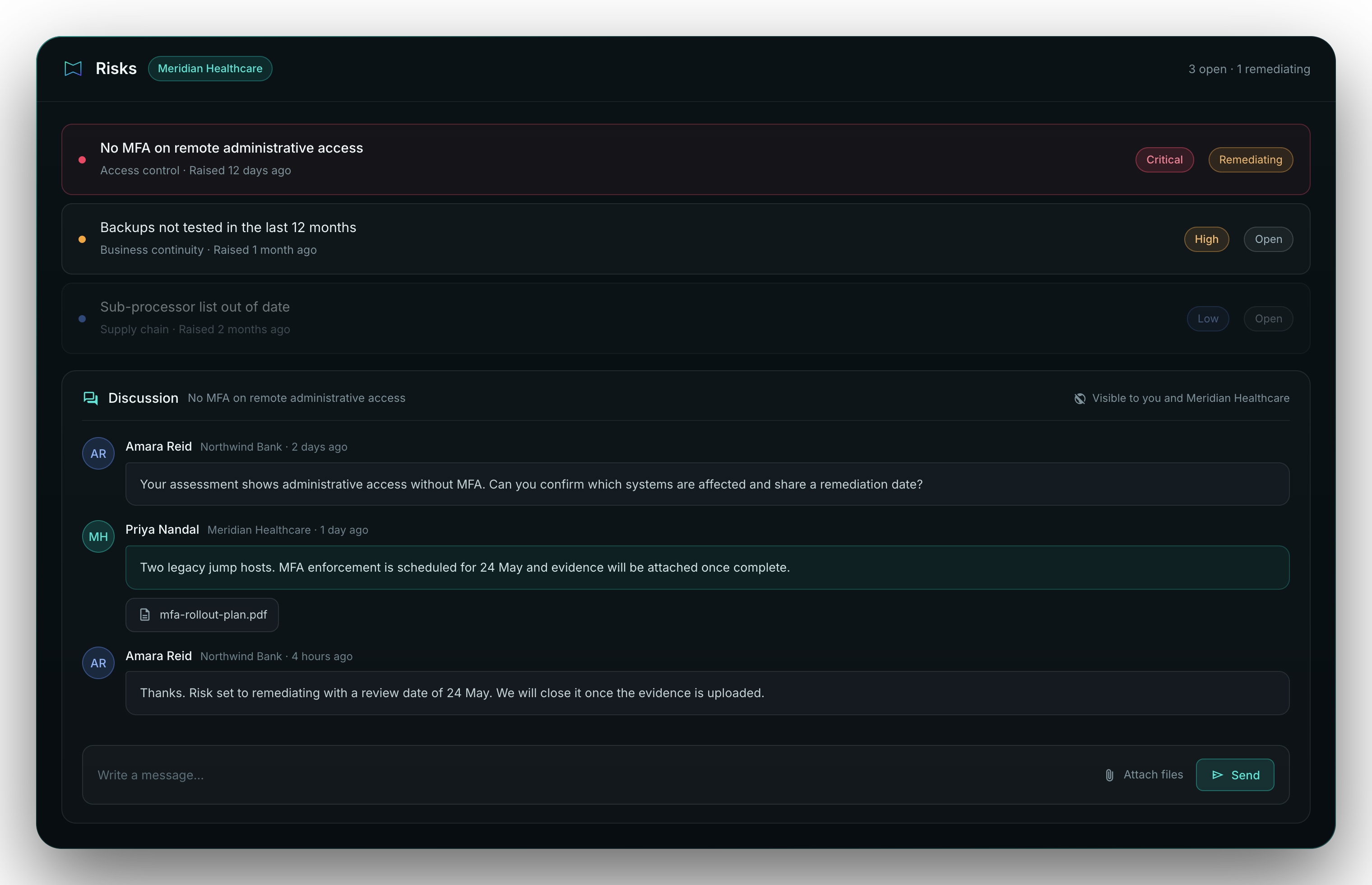
Supplier responses brought together in one place
Risks, remediation and discussions tracked together
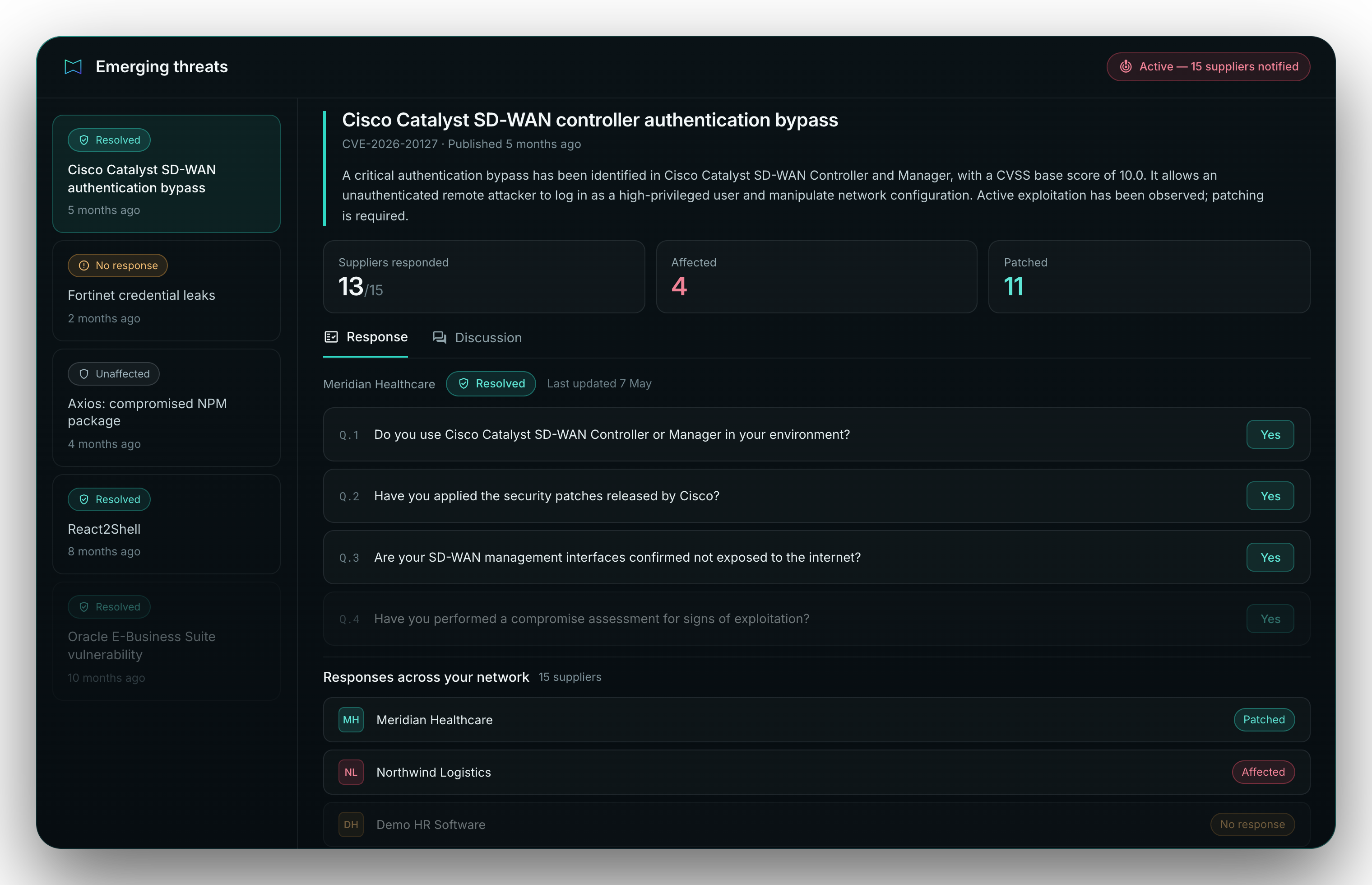
Understand how an emerging threat affects your suppliers
Get a clear view of how suppliers are responding to an emerging threat. See who's investigating, remediating, resolved or unaffected, then drill into individual responses to understand where further action may be needed.
See the overall response
Identify where action is needed
Investigate individual suppliers
Everything you need to manage supplier incidents
Bring monitoring, supplier responses and response activity together so your team can investigate changes, understand potential impact and manage action in one place.





Trusted by organisations protecting complex supply chains
Organisations use Risk Ledger to monitor changing supplier risk, investigate emerging threats and respond with greater context across their supply chains.

Common questions about supplier incident response
How does Risk Ledger help with emerging threats?
Risk Ledger brings supplier responses to emerging vulnerabilities and threats into one view, helping you see who is investigating, remediating, resolved, unaffected or yet to respond and investigate individual responses where needed.
Can we see whether deeper-tier suppliers are affected?
Yes. Risk Ledger can provide response data from suppliers beyond your direct third parties, helping you understand potential exposure deeper into your supply chain.
How does Risk Ledger monitor changes in supplier security?
Risk Ledger combines supplier-maintained security information with external monitoring, helping teams identify changes and signals that may require further investigation.
Can we track remediation with suppliers?
Yes. Teams can raise risks, request remediation and track actions with suppliers, keeping the response and supporting information together in Risk Ledger.
Can we collaborate with other organisations during a supplier issue?
Yes, in selected sectors. Risk Ledger Communities enable organisations to connect with peers, discuss shared suppliers and exchange insights that inform their response to an issue.
If availability is limited, consider naming the eligible sectors or linking to more information.
Be ready when supplier risk changes
Understand changing supplier risk, investigate emerging threats and focus action where it matters most across your supply chain.